

Prestigious international invited speakers will present their work during the SCINT2024 Conference

Prof. Pieter Dorenbos
Delft University of Technology (Netherlands)
After his education in Solid State Physics, he started in the field of scintillation materials research at Delft University of Technology in 1988. First as assistant, later as associate and since 2007 as full professor.
Many new scintillation materials were discovered and patented. Most noteworthy discovery was LaBr3:Ce3+ and later its Sr2+ co-doped version that are now widely applied in gamma radiation detectors. Other well-known scintillators like Cs2LiYCl6:Ce3+, Lu2Si2O7:Ce3+, Ca2+ co-doped LYSO:Ce3+, and more recently infrared scintillators like SrI2:Eu2+,Sm2+ were also discovered within his projects.
Many of his PhD and postdoc students have found a leading position in the scintillation materials field. His interest widened from scintillators to the much broader field of lanthanide activated luminescence phosphors. His ambition has always been towards fundamental understanding on how luminescence color and efficiency changes with type of compound and type of lanthanide.
From collecting data from archival literature, models were developed to predict the wavelength of 5d-4f emission of the di- and trivalent lanthanides in compounds. In 2012, he developed the chemical shift model that explains and predicts the location of lanthanide defect levels, not only relative to the valence and conduction band of inorganic compounds but also relative to the vacuum level. These models are now well-established and frequently used in the field.
In recognition of his work, he received in 2018 the Centennial outstanding achievement award from the Luminescence and Display Materials Division of the Electrochemical society. Pieter Dorenbos (co)-authored 471 peer reviewed publications that are cited on Google Scholar more than 38000 times with an H-index of 95.
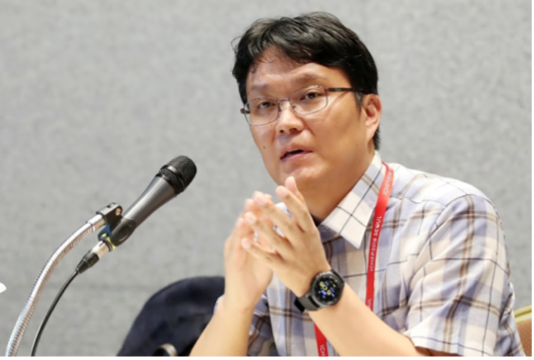
Prof. Hyunsu Lee
Institute for Basic Science (IBS, Korea)
An overview and perspective on scintillators for rare event search
Dr. Hyun Su Lee is the Associate Director of the Center for Underground Physics (IBS) in Korea, where he leads the dark matter search program. His career has been dedicated to advancing scintillation detectors for rare event searches.
This focus began with his Ph.D.(2000-2007) thesis at Seoul National University on the KIMS experiment, “Dark matter search with CsI(Tl) crystals”. He made foundational contributions to developing low-background CsI(Tl) and was the first author on KIMS’s initial dark matter search results.
After a postdoctoral fellowship at the University of Chicago (2007-2011), Dr. Lee expanded his research to NaI(Tl) detectors. He now serves as the Spokesperson for the KIMS (2014-present) and NEON (2019-present) experiments, and as Co-spokesperson for the COSINE experiment (2015-present).
Dr. Lee led the COSINE-100 collaboration to its landmark Nature (2018) publication, which tested the DAMA/LIBRA annual modulation signal using the same NaI(Tl) target. His NEON experiment recently pioneered a novel encapsulation technique that increased NaI(Tl) light collection efficiency significantly. This breakthrough has enabled new light dark matter searches and is the foundation for the current COSINE-100U upgrade. He is also actively leading the R&D for low-background NaI(Tl) crystal growth, which is essential for the next-phase COSINE-200 experiment.
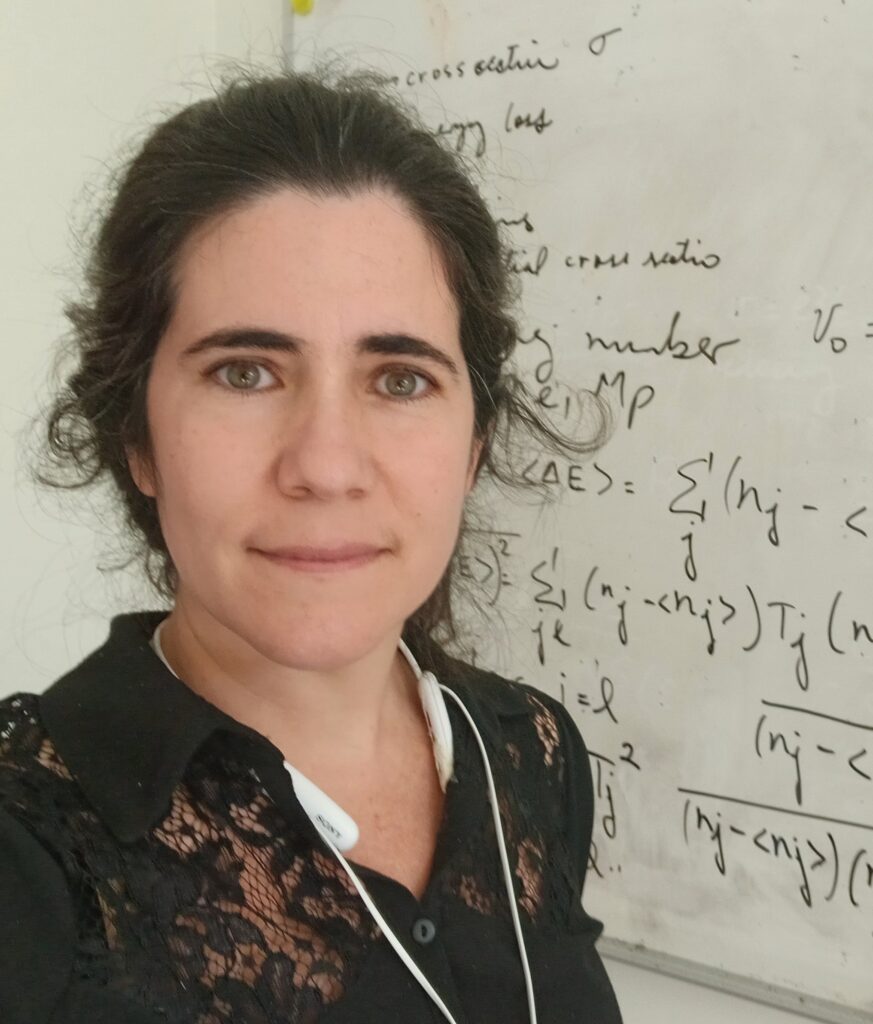
Dr. Rosana Martinez Turtos
Aarhus University (Denmark)
From particle energy loss to energy deposited: mechanisms of
luminescence and electron/hole trapping in wide band gap dielectrics
Dr. Rosana M. Turtos is an Assistant Professor in the Department of Physics and Astronomy at Aarhus University, where she leads a research group on exciton-driven scintillation and ionizing-radiation detection.
Dr. Turtos earned her PhD in Physics and Astronomy from the University of Milano-Bicocca in 2017, where her thesis focused on prompt photon emission in scintillating materials. She went on to work as a research fellow at CERN in the Crystal Clear group, contributing to the development of next-generation time-of-flight PET detectors. This earned her the Radiation Instrumentation Early career award from the IEEE nuclear and plasma science society in 2019.
In 2021, she was awarded a major RECRUIT grant from the Novo Nordisk Foundation to build her own laboratory—the “Exciton Lab”—aimed at investigating the exciton dynamics in solid state materials for fundamental and applied purposes.
Her recent publications include pioneering work on 3D radiation dose imaging using optically stimulated luminescence (OSL) in LYSO:Ce and YSO:Ce crystals; a reusable and tissue-equivalent 3D dosimeter for radiotherapy based on LiF nanoparticles; and nonlinear quenching effects of the excitonic emission appearing in 2D semiconductors films.
With a strong commitment to both teaching and mentorship, she supervises students across bachelor, master, and PhD levels, and is deeply involved in building her research group’s capacity by investigating a manyfold of luminescence phenomena.
Her publication record has earned her more than 1000 citations and a H-index of 16 as per webofscience.
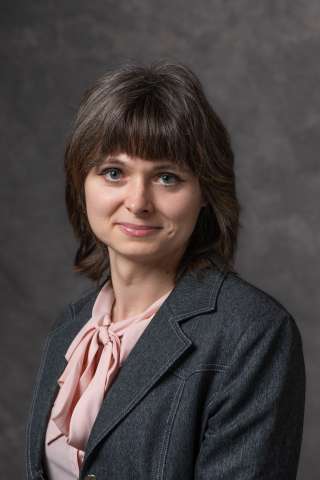
Dr. Weronika Wolszczak
Lawrence Berkeley National Laboratory (USA)
Weronika W. Wolszczak is a research scientist at Lawrence Berkeley National Laboratory, where she leads projects on optical detection of ionizing radiation and on understanding fundamental processes in organic scintillators. Her research combines advanced optical and laser-based measurement techniques with detailed characterization of scintillation properties to investigate energy-transfer pathways and the mechanisms that govern light production in radiation detection materials. She specializes in time-, wavelength-, and temperature-resolved spectroscopic methods to study how scintillators respond from the moment of excitation through the full sequence of relaxation processes.
Weronika received her Ph.D. in 2019 from TU Delft, where she used internal alpha-particle contamination and digital signal processing to characterize high-density quenching in scintillators, studied pulse-shape changes as a function of gamma-ray energy, and developed the first high-energy-resolution, near-infrared scintillator—often referred to as the “black scintillator.”
At LBNL, she co-organized the Workshop on Radiation Detection Materials (WoRDMap), contributing to the development of research priorities and a strategic roadmap for the NNSA Nuclear Nonproliferation R&D Office. Her earlier research includes work on thallium-based scintillators for the Defense Threat Reduction Agency (DTRA) and water-based liquid scintillators for future neutrino experiments.
Invited conference and workshop presentations include the Nuclear Structure Workshop in Bormio; invited talks at SPIE Optical Engineering + Applications; an invited contribution to SCINT (Richard Williams Memorial Session); a presentation for Accelerator Research and Innovation for European Science and Society – Advanced Diagnostics at Accelerators (ARIES–ADA); and a talk at a workshop organized by Saint-Gobain (now Luxium Solutions). Invited seminars include presentations at the National Centre for Nuclear Research (Świerk), Jagiellonian University, the University of Tennessee, Wake Forest University, and TU Delft.
Weronika collaborates broadly across national laboratories, universities, and industry. Her work aims to uncover the fundamental physics that drive scintillation processes and to support the deliberate design of next-generation radiation detection materials.