



TOURS & EXCURSIONS
The exciting excursions on Wednesday, May 27th will include a tour of various historic heritage sites in Gyeongju.
Each participant can decide one of the above activities, whose cost is included in the registration fee. You will find all the information and details below.
Course 1
Bulguksa Temple, Seokguram Grotto, Cheomseongdae(The Ancient Astronomical Observatory)
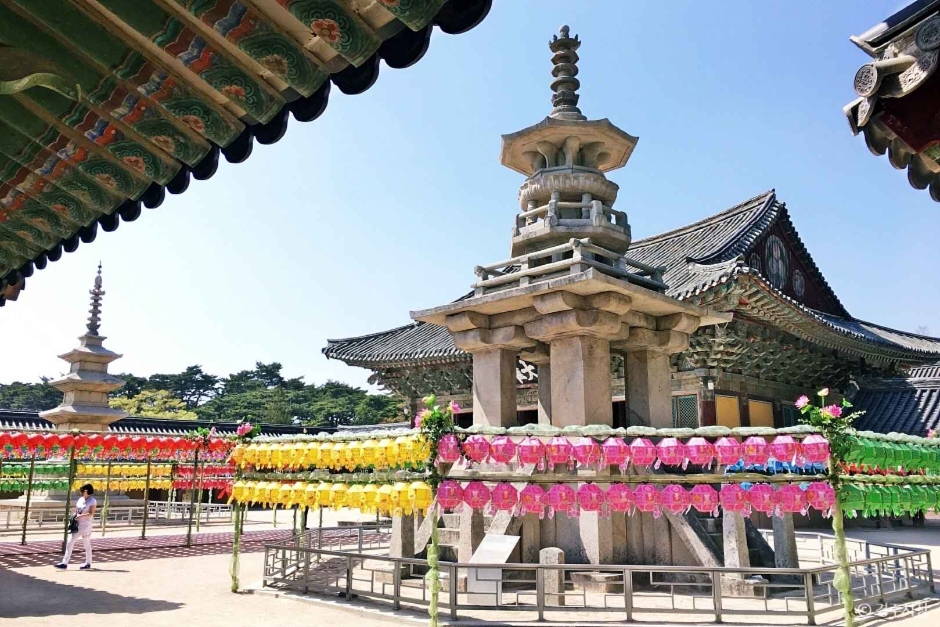
Bulguksa Temple: A Glimpse into Silla Architecture [UNESCO World Heritage]
- Visit Korea webpage
- Bulguksa Temple is a representative relic of Buddhist culture from the Silla kingdom. The temple was built during the 15th year of King Beopheung’s reign (514-540) to wish for peace and prosperity for all. It was later rebuilt in 751 by Kim Dae-seong. Unfortunately, the temple caught fire during the Imjin War (1592-1598). After the war, the temple suffered serious damage and was often the target of theft.
- Starting in 1920, the temple has undergone continual restoration work. The temple now holds seven national treasures and a number of additional important heritages and was designated a World Cultural Heritage Site along with the nearby Seokguram Grotto by UNESCO in December 1995.
Seokguram Grotto [UNESCO World Heritage]
- Visit Korea webpage
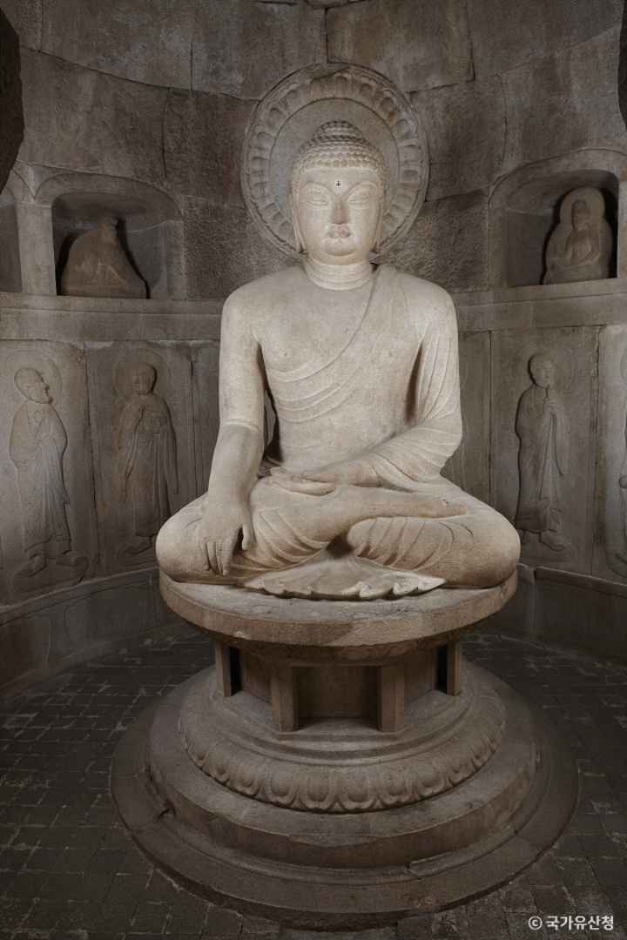
- Seokguram Grotto was constructed by Kim Dae-Seong during the reign of King Gyeongdeok (742-765) of the Silla Kingdom. Located 3 kilometers away by hiking trail and 9 kilometers by car from Bulguksa Temple, the grotto was designed very harmoniously with the seated Buddha facing the East Sea. It is a valuable cultural heritage that is preserved and registered as a UNESCO World Heritage on December 6, 1995.
Cheomseongdae(The Ancient Astronomical Observatory)
- Visit Korea webpage
- Cheomseongdae Observatory, constructed during the reign of Queen Seondeok (r. 632-647), is one of the landmarks of Gyeongju. The observatory was built in a cylinder shape at approximately 9 meters in height. The observatory consists of 365 stones, symbolizing the number of days in a year. The rocks are piled in 27 layers symbolizing the 27th ruler, Queen Seondeok, and the days in a lunar month by adding the of two rock layers on top.
- Cheomseongdae Observatory, where Bo-gyeom and Ji-ah, bound by a special fate, encounter each other, is the landmark that represents the city of Gyeongju and one of the oldest astronomical observatories in the world. In addition to its superlative value as a historical site, it is also popular as a tourist destination thanks to flowers and plants that bloom each season.

Course 2
Yangdong Folk Village, Oksanseowon Confucian Academy, Gyeongju National Museum
Gyeongju Yangdong Village [UNESCO World Heritage]
- Visit Korea webpage
- Gyeongju Yangdong Village is Korea’s largest traditional village, showcasing the traditional culture of the Joseon dynasty and the beautiful natural surroundings. Thanks to its many cultural heritages, including treasures, national treasures, and folklore materials, the entire village has been designated as a cultural heritage site. Many people have visited this village to see its wealth of cultural heritages and scenic surroundings, including King Charles III, who visited this village in 1993.
- Seolchangsan Mountain and its four spines of mountains can be seen beyond the village. Approximately 160 old houses and 500-year-old thatched-roof cottages are nestled within the valley. Fifty-four of these homes are over 200 years old and have been excellently preserved in their original state, offering the opportunity to view a variety of unique traditional Korean houses in person.


Oksanseowon Confucian Academy [UNESCO World Heritage]
- Visit Korea webpage
- Oksanseowon Confucian Academy was built to commemorate the academic achievements and virtues of Confucian scholar Yi Eon-jeok (1491-1553). It was founded in 1572, the fifth year of King Seonjo’s reign, and received its current name the following year. It was one of the 47 Confucian academies that was ruled out from the Confucian academy abolition order made by Heungseon Daewongun. Although the building structures do not carry significant meaning in architectural aspect, the distinguished space arrangement of the buildings is hard to go unnoticed. Dokrakdang Hall, which was Yi Eon-jeok’s vacation annex as well as his study room, is situated 700 meters away to the north from Oksanseowon.
Gyeongju National Museum
- Visit Korea webpage
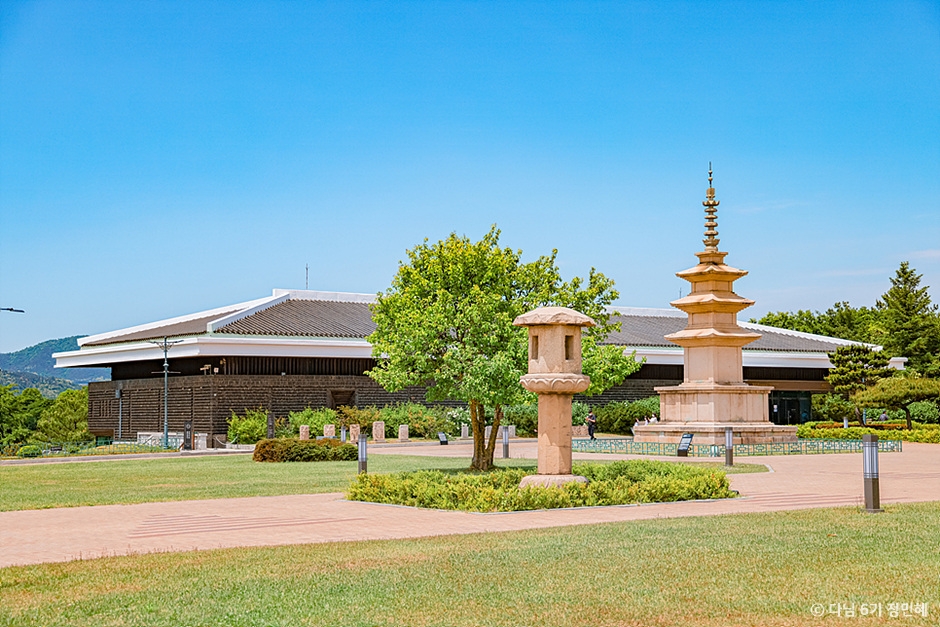
- Gyeongju National Museum houses numerous historical and cultural artifacts of the Silla dynasty (57 BC-AD 935). The museum provides various programs including at the Children’s Museum School. The newly renovated Silla Art Gallery and Silla History Gallery lobby by Teoyang Studio are popular among visitors. This multi-complex center provides the history of Silla with various artifacts.
Course 3
Gyeongju National Museum, Donggung Palace and Wolji Pond, Hwangnidan-gil Street
Gyeongju National Museum
- Visit Korea webpage
- Gyeongju National Museum houses numerous historical and cultural artifacts of the Silla dynasty (57 BC-AD 935). The museum provides various programs including at the Children’s Museum School. The newly renovated Silla Art Gallery and Silla History Gallery lobby by Teoyang Studio are popular among visitors. This multi-complex center provides the history of Silla with various artifacts.

Donggung Palace and Wolji Pond
- Visit Korea webpage
- Donggung Palace and Wolji Pond in Gyeongju are secondary palace sites of Silla. The palace, along with other secondary palaces, was used as the eastern palace where the prince lived, and banquets were held during auspicious events or to welcome important guests. It is also where King Gyeongsun of Silla invited King Wang Geon of Goryeo and had a feast to complain about the critical situation in 931 after being invaded by Gyeon Hwon. After unifying the three kingdoms, Silla’s King Munmu dug a large pond in the 14th year of his reign (674), creating three islands in the center of the pond along with a 12-peaked mountain to the northeast. Beautiful flowers and trees were planted here, and rare birds and animals were raised. In the Samguksagi (History of the Three Kingdoms) from the Goryeo dynasty, there is only a record of Imhaejeon Hall and no mention of Anapji Pond. After Silla fell and the place fell into ruins during the Goryeo and Joseon dynasties, poets and calligraphers looked at the pond and recited a line of poetry that says, “The once splendid palace is gone, and only geese and ducks fly in.” That’s why the place is called Anapji, using the letters ‘an’ for wild geese and ‘ab’ for ducks. In the 1980s, pottery fragments with the inscription “Wolji” were excavated, and it was confirmed that this area was originally called “Wolji,” which means “a pond that reflects the moon.” And the name Anapji was changed to Wolji Pond afterwards.
Cheomseongdae(The Ancient Astronomical Observatory)
- Visit Korea webpage
- Cheomseongdae Observatory, constructed during the reign of Queen Seondeok (r. 632-647), is one of the landmarks of Gyeongju. The observatory was built in a cylinder shape at approximately 9 meters in height. The observatory consists of 365 stones, symbolizing the number of days in a year. The rocks are piled in 27 layers symbolizing the 27th ruler, Queen Seondeok, and the days in a lunar month by adding the of two rock layers on top.
- Cheomseongdae Observatory, where Bo-gyeom and Ji-ah, bound by a special fate, encounter each other, is the landmark that represents the city of Gyeongju and one of the oldest astronomical observatories in the world. In addition to its superlative value as a historical site, it is also popular as a tourist destination thanks to flowers and plants that bloom each season.
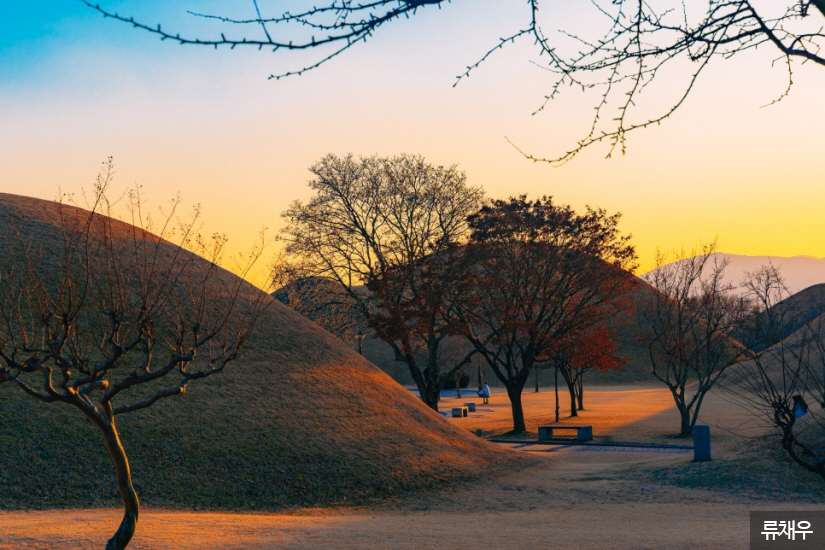
Cheonmachong Tomb (Daereungwon Ancient Tombs) Palace and Wolji Pond
- Visit Korea webpage
- Daereungwon Ancient Tombs are one of the most well-known sights in Gyeongju, a history park home to 23 small and large ancient tombs. The area is dotted with tranquil trails among the tombs like the largest tomb in Hwangnam-dong, Hwangnamdaechong Tomb; Cheonmachong Tomb, the place where Cheonmado, a saddle flap painting, was excavated from; and the tomb of King Michu, nicknamed the “Tomb of the Bamboo Warrior.”
- Cheonmachong Tomb, excavated in 1973, has a height of 12.7 meters and a diameter of 50 meters. Its excavation unearthed many artifacts, such as the famous Gold Crown from Cheonmachong Tomb. Its name comes from Cheonmado, a mudguard saddle flap with a painting of a heavenly horse. Cheonmachong Tomb is the only tomb in the Daereungwon Ancient Tombs to be opened to the public.
- The tomb is thought to have been constructed between the late 5th century and early 6th century. Artifacts excavated from the tomb include a gold crown, gold cap, gold waist belt, gold diadem, and gilt-bronze shoes worn by the buried. The gold crown, in particular, is known as the largest and the most elaborate of all gold crowns unearthed in Korea. The artifacts themselves can be found in Gyeongju National Museum, so don’t miss the chance to see them in person.
- Another must-visit site is the Daereungwon Magnolia Photo Area, a lone magnolia tree standing between the beautiful curves of ancient tombs.